White Star Line
Location: Liverpool
Founded: 1845
Founders: John Pilkington, Henry Wilson, Thomas Henry Ismay
Successor: Cunard-White Star Line
Areas: Transatlantic, Australia and New Zealand
Note from the author: I did have to use AI for phrasing help more than I hoped to due to time constraints, but everything was proofed by me.
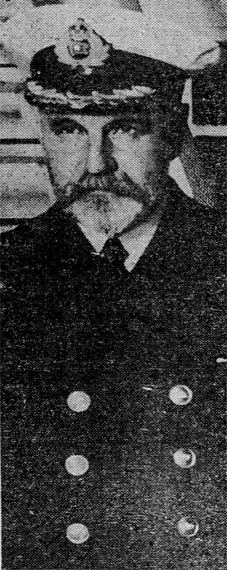
Captain Hugh Frederick David
(findagrave.com).
Captain Hugh Frederick David, a Welshman who would go on to command several White Star Line ships including the RMS Olympic, was born 10 October 1866 in Laugharne, Carmarthenshire, Wales. He was the third son of Samuel Sinclair David, who the 1871 census listed as a chemist, postmaster, and general dealer, and his wife Mary Guisford David. He had two older brothers, Martin and Francis, two younger brothers, Archibald and Harold, and two younger sisters, Mary Beatrice "Beta" and Margaret. Martin would eventually become House Master of the prestigious Tonbridge School and was at one time a tutor to the future King Edward VIII. One of his cousins (the son of his paternal uncle William) was Albert David, an Anglican bishop who eventually rose to become Bishop of Liverpool.
By the time of the 1881 census, young Hugh was listed as a tailor's apprentice living in Pembroke, Wales, with another paternal uncle, Peter, a tailor. Evidently, tailoring was not for him. While it is not known whether he left with his family's blessing or simply ran away to seek adventure, he went to sea in April of that year.
Captain David's first ship was the barque Woodfall, owned by Messrs. B. R. Hennessy, which he joined as an apprentice on 07 April 1881. He rose quickly from apprentice to Second Mate and then First Mate, remaining with that line until 23 June 1885. He next served with the firm of Messrs. Thomas and Radcliffe, better known as the Inman Line, including time aboard the SS City of New York, followed by a period with ships belonging to Messrs. D. and C. MacIver before joining the White Star Line as a Junior Officer in February 1894.
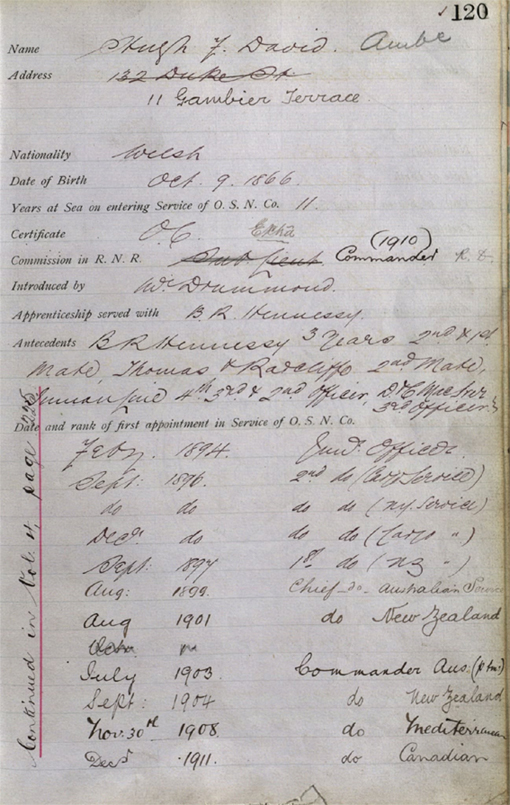
David's White Star record detailing his progress from 1894.
It is not known exactly which vessels he served aboard as a Junior Officer, but by September 1896 he had been appointed Second Officer of the SS Cevic. A year later, he became First Officer of the SS Delphic, a role he held for nearly two years, before serving another two years as Chief Officer of the SS Afric. After a further two years as Chief Officer of the SS Gothic, Captain David received his first command, the SS Runic, in July 1903. He remained on the Runic for ten months before transferring to command the SS Corinthic in the company's New Zealand service, a posting he held for almost four and a half years.
In February 1909, Captain David received his first command in the company's Atlantic service, the SS Romanic. During a voyage in late November 1910, the ship encountered heavy seas that smashed the glass of three portholes and flooded three cabins. Captain David was able to work the ship clear of the worst of the weather by running off her normal course. He left the SS Romanic in December 1911, serving for one month as master of the Leyland Line's SS Canadian before beginning his first stint as master of the SS Megantic in the White Star Line's Liverpool-Montreal service on 01 January 1912.
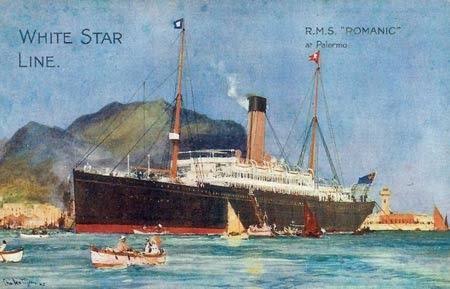
RMS Romanic.
Captain David's first months on the Megantic coincided with the Titanic disaster. While on the homeward voyage from Portland, Maine, to Liverpool in mid-April 1912, the Megantic left harbour a day late after David refused to move for 24 hours in a heavy fog bank outside the port, a fog the crew later believed had prevented them from reaching Titanic in time to assist. Once clear of the Banks, the ship received Carpathia’s report that Titanic had sent S.O.S., at which point David slackened speed and cruised for hours searching for possible survivors, though none were found. Less than 24 hours out, the Megantic then found herself in the midst of what the crew described as "an awful icefield," surrounded by thick white fog with gleaming icebergs visible whenever it lifted. With Captain David the only man aboard who knew the fate of the Titanic, he ordered the engines reduced to just sufficient power to prevent drifting, determined to bring his own ship safely into port despite complaints from below that the slow speed would cost the stokehold crew a Sunday at home.

The SS Megantic aboard which Captain David searched for Titanic survivors. (Click image to enlarge)
He remained on the Megantic until February 1914, before serving one month as master of the SS Cymric and then returned to the Megantic in March 1914, a tenure that included the loss of the Canadian Pacific liner RMS Empress of Ireland on 29 May 1914. Two days later, while on a Liverpool to Montreal passage with 772 passengers and mails, Captain David brought the Megantic to the scene of the tragedy. According to a report filed from Montreal on 02 June 1914, the Megantic arrived about 5 o'clock on Sunday afternoon, 31 May 1914, and stopped near the buoy marking the grave of the fallen ship. Every member of the crew who could be spared from duty was mustered on the main deck and was joined by the passengers, who took up positions on the shelter deck abaft the bridge, surrounded by the ship's orchestra. From the bridge, Captain David bared his head and his example was followed by the entire assemblage, who, led by the orchestra, joined in singing "Abide With Me" over the spot where the liner lay.
At the beginning of World War I, in September 1914 Captain David was mobilised for Royal Navy service and took the command of the RMS Teutonic, commanding her until 01 January 1917, when he was demobilised. Captain Hugh David's assumption of command over White Star Line vessels during the First World War proved to be marked by extraordinary peril. After his long tenure commanding the Megantic, David took over the RMS Celtic on 22 May 1917. The Celtic was a substantial transport vessel carrying troops and supplies across the Atlantic during the war effort.
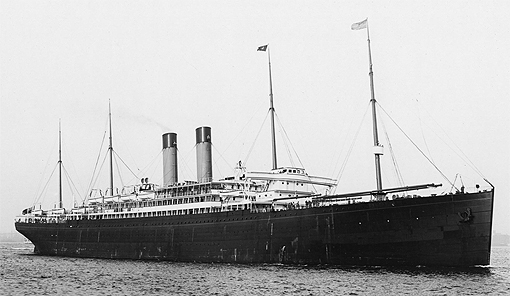
RMS Celtic in 1905 in the Hudson River
(Digital Culture of Metropolitan New York).
However, David's command of the Celtic was nearly disastrous. In April 1918, while departing an English port, the ship became separated from its convoy. The Celtic was subsequently struck by a German U-boat torpedo off the Isle of Man, which tore a massive hole in her port side. The damage was catastrophic enough that the vessel appeared destined to sink. But fortune intervened in an extraordinary way as the U-boat commander fired a second torpedo that struck the Celtic on her starboard side, creating another enormous breach. Rather than sending the ship to the bottom, this second hit inadvertently saved her by allowing water to flow completely through the hull, which caused the ship to recover her list and settle on the mud rather than capsize. The Celtic was subsequently towed to port for repairs.
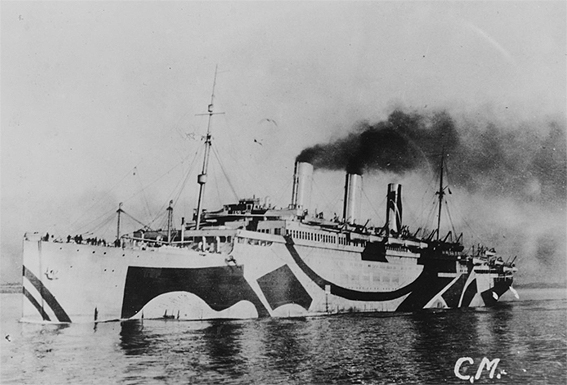
S.S. Justicia (British Transport, 1917-1918). Photographed prior to July 19, 1918, when she was sunk. (Courtesy of Jack Howland, 1987,
Naval History and Heritage Command).
David remained in command of the Celtic until 01 July 1918, when he was reassigned. His next command came swiftly, as he took over the SS Justicia on 13 July 1918, assuming control from Captain Alexander E.S. Hambelton, who was taking a scheduled leave of absence. Tragedy struck six days later. The Justicia, regarded as the most valuable Allied transport vessel operating between the United States and England, was torpedoed and sunk. The ship had been an impressive vessel, capable of carrying 5,000 troops comfortably along with 15,000 tons of cargo, and could maintain a speed of eighteen knots. She was on her fourth voyage carrying American soldiers when she went down. The loss represented a severe blow to the Allied war effort and a deeply personal tragedy for Captain David, who had survived one torpedo attack only to lose his new command to another within weeks of taking the helm.
Following the loss of the Justicia, Captain Hugh David received a new appointment. In September 1918, he took command of the Dominion Liner SS Regina, one of the largest and best freighters operating on the Philadelphia-Liverpool route. David would retain this command until April 1920, overseeing the vessel through the final months of the First World War and into the challenging years of post-war shipping.
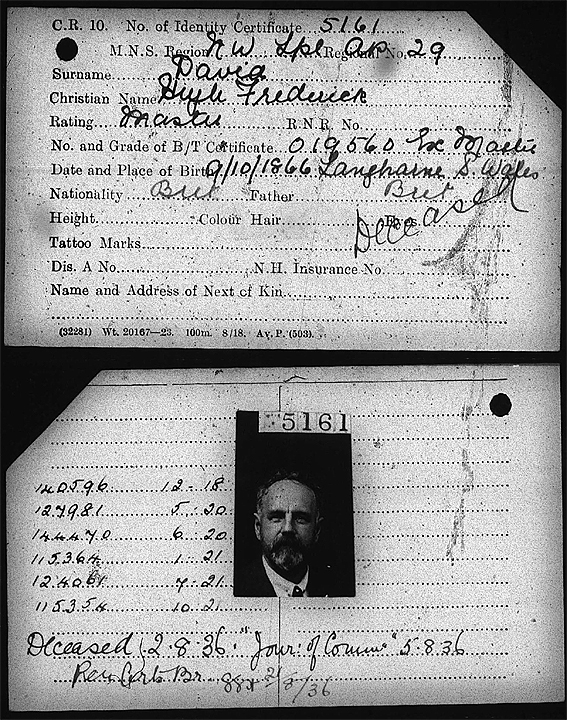
David's C.R.10. Identity Document (1919).
On 13 December 1919, Captain David and the Regina undertook one of the most dramatic rescues of the era. The vessel encountered the British steamship Messina approximately 300 miles east of Newfoundland, struggling in a severe gale. The Messina had been rendered helpless four days earlier when mountainous waves tore away her propeller, stripped her decks bare, and carried away all navigational instruments. Worse still, the battering seas had wrenched the steel covers from two cargo hatches, allowing seawater to pour into the ship's hold of grain. As the grain swelled from exposure to saltwater, it exerted tremendous pressure on the vessel's hull, splitting deck planks and bulging the hatch beams. The Messina was literally bursting apart beneath her crew, and all 36 men aboard had abandoned hope of rescue.
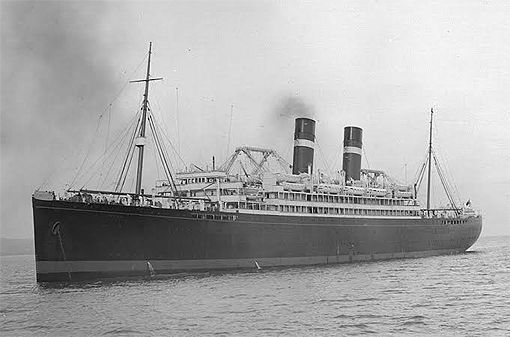
SS Regina (launched in 1917).
Captain David immediately altered course and maneuvered the Regina to the aid of the distressed vessel. Recognizing the impossible conditions, he employed an extraordinary measure: thousands of gallons of oil, including precious engine oil, were poured from the Regina onto the mountainous waves to calm the turbulent sea and create a small window of opportunity for rescue boats. The sacrifice was total, the crew used practically all the ship's oil reserves, leaving the Regina with scarcely enough fuel to reach port.
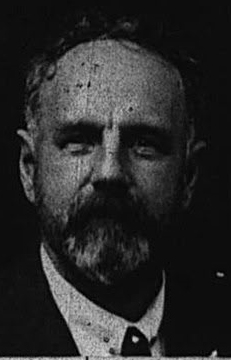
Captain David in 1919.
At 7:45 A.M., the port boat was launched under Second Officer Gerald Jones. Despite the oil's moderating effect, the small boat was repeatedly thrown violently against the side of the Messina, sustaining considerable damage. Nineteen men were successfully brought aboard before the boat had to be recovered, too damaged for further use. At 9:45 A.M., the starboard boat was launched under First Officer John Evans, with the Regina continuing to pour oil and maneuver closer to the sinking vessel. By 10:45 A.M., the remaining crew members, including Captain H.S. Reavly of the Messina, had been taken aboard.
The rescue was executed with such precision and bravery that Captain Reavly later testified: "The officers and men of the Regina did as splendid a piece of work as was ever seen at sea. It is entirely due to their bravery and skill that the 36 of us are alive today." He noted that the crew had given up hope entirely, certain that no small boat could survive such mountainous seas. The seamanship displayed by Captain David and his officers transformed an almost certain tragedy into a complete success.
The Regina proceeded to Philadelphia, where the rescued men were landed safely on 20 December 1919. Captain David, characteristically modest about the achievement, deflected praise to his officers, asking that Chief Officer Robert Hume be consulted for details of the operation. The rescued crew were provided accommodations, with officers billeted at hotels and crew members at the Sailors' Home.
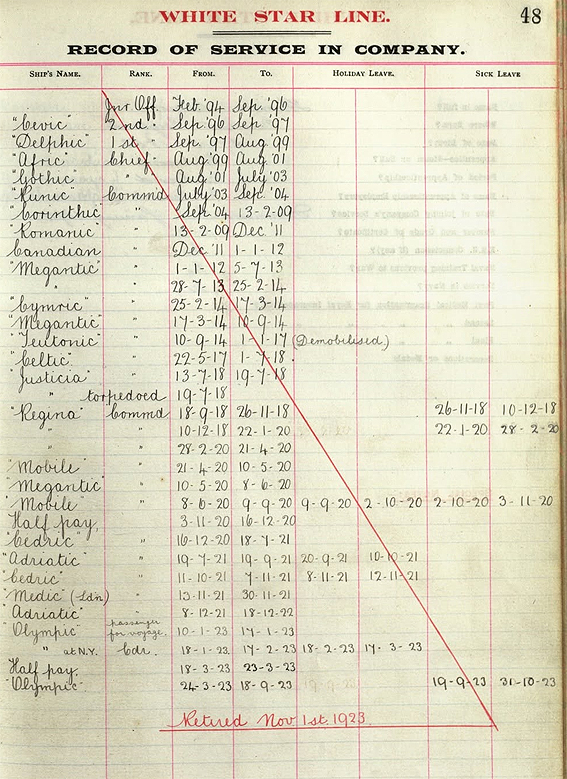
David's White Star records detailing the ships
he worked aboard between 1896 and 1923.
Following his successful tenure on the Regina, which ended on 21 April 1920, Captain David commanded the SS Mobile, a German-built liner originally known as the SS Cleveland, which had been seized by the British government after World War I and was temporarily under the management of the White Star Line. He commanded the Mobile from from 21 April 1920 to 10 May 1920, as well as from 08 June 1920 to 09 September 1920 and sandwiched between those tenures was one final run as Megantic’s skipper. Following a month of holiday leave and another month of Half-Pay, Captain David commanded the RMS Cedric from December 1920 to July 1921, followed RMS Adriatic from July to September 1921, then the Cedric for another month from October to November 1921. Captain David served seventeen days as master of the SS Medic in November 1921 before again taking over the RMS Adriatic on 08 December 1921.

The RMS Adriatic. (Click image to enlarge)
His time in command of Adriatic was marked by a dramatic test of his leadership. On Friday morning, 11 August 1922, while en route to New York, a disastrous coal bunker explosion occurred nearly 50 feet below the main deck. The blast killed five crew members outright or shortly thereafter and left three others severely injured. Known across the North Atlantic as a hard skipper who demanded strict discipline, Captain David responded with promptness and composure, containing the fire before it could threaten the ship or its passengers. Upon docking in New York, grateful passengers, led by former New York Governor Martin H. Glynn, presented Captain David and his crew with a formal testimonial lauding their discipline, coolness, and kindness.
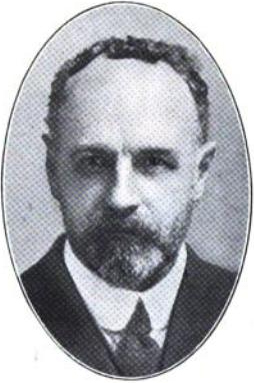
Captain Hugh Frederick David
(findagrave.com).
In January 1923, Captain Hugh David boarded the RMS Olympic, then the White Star Line’s second largest liner, as a first-class passenger to familiarize himself with the vessel before officially succeeding Captain Alexander E.S. Hambelton, who had previously succeeded on several other vessels including the Celtic, Adriatic, and most notably, the Justicia. Captain Hambelton greeted his successor warmly at Southampton at the start of his own final voyage, introducing Captain David to the ship he would soon command. Tragically, during this voyage, Captain Hambelton collapsed mid-ocean due to severe gastric hemorrhages and it was only due to the care he received from the ship’s surgeons that he would survive.. While Assistant Commander Eustace R. White assumed temporary operational charge and navigated Olympic into New York with Captain David alongside him on the bridge, Captain David took full command to lead the great liner on her return voyage back to England. During his time on Olympic, he remained fiercely protective of his seamanship and the reputation of the line. When American newspapers implied a transatlantic speed race between Olympic and the United States Shipping Board liner Leviathan in August 1923, White Star officials firmly rejected the claim, emphasizing Captain David's unwavering commitment to safety over hazardous racing.
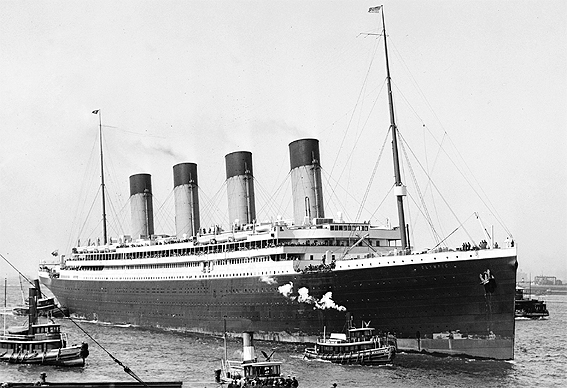
RMS Olympic arriving at New York on her maiden voyage, 21 June 1911 (George Grantham Bain collection, Library of Congress).
Despite commanding one of the largest liners in the world, Captain David was celebrated for an extreme modesty regarding his career. When a journalist writing under the pseudonym Father Neptune called upon him in August 1923 to write a profile, Captain David declined to be interviewed, refusing to boast about his life or his many stirring adventures at sea. Profiled anyway through second-hand accounts, he was characterized as an exceptionally able and fearless navigator who possessed an intense devotion to his command, so much so that he was frequently found in his cabin aboard ship when in dock rather than taking the opportunity to go ashore.
Captain David's command of Olympic lasted roughly seven months (not including one month of holiday leave). On 18 September 1923, health issues forced him to step down temporarily, and after a month of sick leave, he officially retired from the White Star Line at the end of that year after nearly 30 years of service. At his retirement, he was granted six months’ full pay. Retirement, however, did not diminish his dedication to maritime affairs. Settling at Blatchington House in East Blatchington, near Seaford, Sussex, he devoted his remaining years to legal and civic marine service.
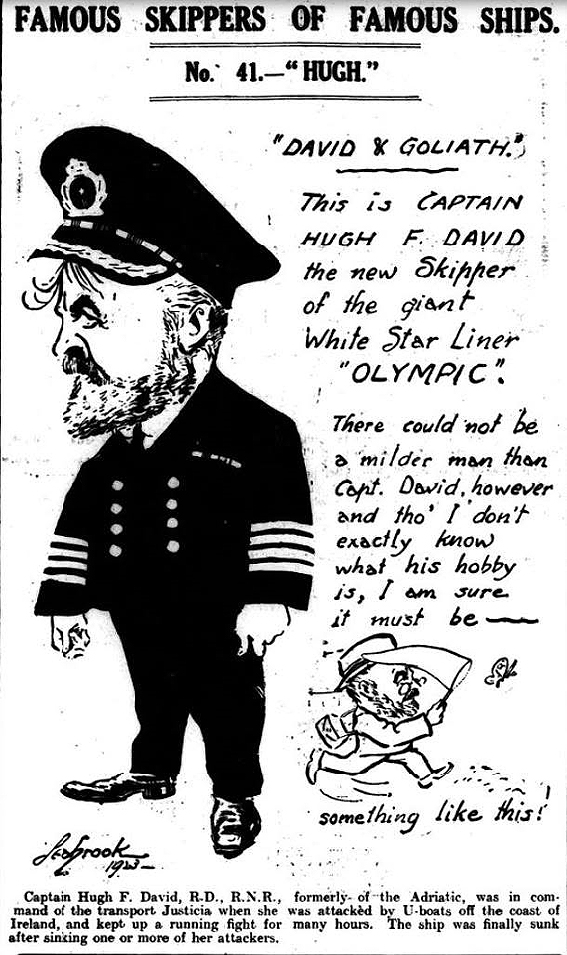
Hampshire Advertiser 13 January 1923.
In 1924, Captain David was appointed a Nautical Assessor under the Merchant Shipping Act, serving the Liverpool County Court, the Board of Trade Inquiries, and later the Court of Appeal. He was elected an Elder Brother of Trinity House and, by invitation of the Prime Minister, served as a Trustee of the National Maritime Museum. A long-serving council member of the Mercantile Marine Service Association since 1919, he became its Deputy Vice-President in 1924 and remained on the executive council until 1935, when he voluntarily retired to make room for younger officers. He also served as Secretary of the Liverpool Geographical Society, res and frequently contributed letters on topical nautical issues to The Journal of Commerce, including one submitted only a week before his passing.
A lifelong bachelor who never married, Captain David was known in his personal life for a direct and plainspoken manner that belied a warm heart. A dedicated lover of animals, he became a familiar sight around Seaford, routinely stopping outside the local railway station to feed treats to a cab horse. Captain Hugh Frederick David died suddenly at his home on Sunday, 2 August 1936, at the age of 69. His funeral took place at Seaford Cemetery on 6 August 1936, drawing a distinguished gathering of family, local residents, and prominent figures from the British maritime community, including former White Star Line Commodore Sir Bertram Fox Hayes, who came to pay their final respects to the esteemed master.
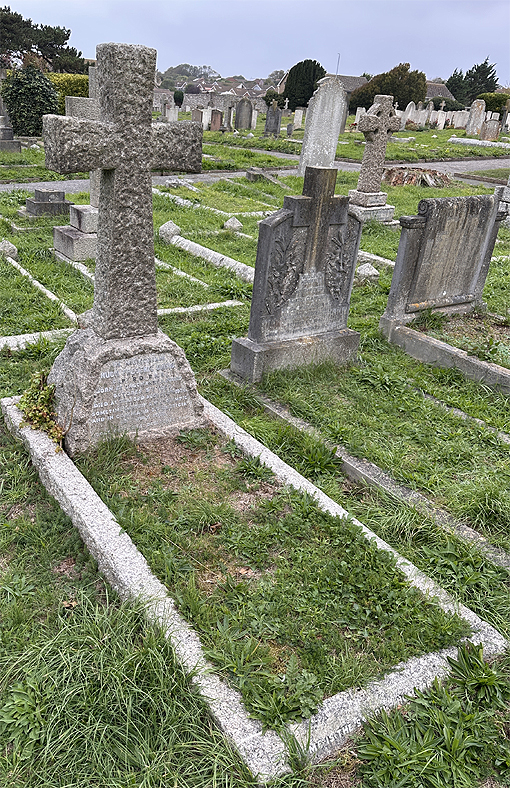
David's grave marked by a large cross, in Seaford Cemetery
(photograph by Dan Parkes, 2026).
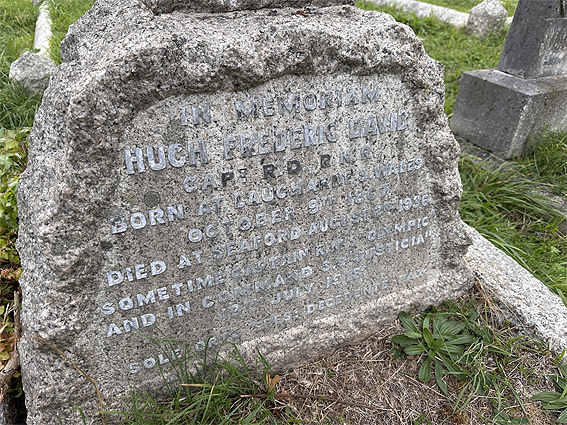
A close-up of the headstone inscription on David's grave in Seaford Cemetery
(photograph by Dan Parkes, 2026).
The headstone reads:
IN MEMORIAM
HUGH FREDERIC DAVID
CAPT. R.D., R.N.R.,
BORN AT LAUGHARNE, S. WALES
OCTOBER 9TH 1867,
DIED AT SEAFORD AUGUST 2ND 1936.
SOMETIME CAPTAIN R.M.S. “OLYMPIC”
AND IN COMMAND S.S. “JUSTICIA”
19TH JULY 1918.
SOLE ORTO SPES: DECEDENTE PAX.
The latin phrase can be translated: “With the rising of the sun, hope; with its setting, peace.”
If this website has been of some help, please consider supporting it with a coffee
to ensure it can continue. It can be anonymous. Anything helps!: